Showing posts with label Catholic books. Show all posts

Thursday, May 09, 2019

American Priest: The Ambitious Life and Conflicted Legacy of Notre Dame's Father Ted Hesburgh


The above link is to the Amazon page for an interesting new book about the long time head of Notre Dame.  Famous for both civil rights and public activity, Hesburgh also was part of the Land O Lakes statement that ushered in the era of Catholic Universities downplaying their Catholicism to appear 'independent'.  The author of the book is Fr. Wilson Miscamble, C.S.C, a fellow Priest of the Holy Cross who was friends with Hesburgh but who apparently has written a balanced account of his legacy.  I just finished watching a good interview with the author by Raymond Arroyo on EWTN.  Fr. Miscamble was clearly on the side of those who felt the Land O Lakes statement and subsequent actions in Catholic higher education hurt the transmission of the faith to the younger generations.  It seems like this book will be a great book about a great and imperfect priest.  Crux News has a shorter written interview on the book here.
 

Wednesday, May 08, 2019

Tolkien: Maker of Middle-earth


In a hole in the ground there lived a hobbit.” With these words the Oxford professor J.R.R. Tolkien ignited a fervid spark in generations of readers. From the children’s classic The Hobbit to the epic The Lord of the Rings, Tolkien’s adventurous tales of hobbits and elves, dwarves and wizards have introduced millions to the rich history of Middle-earth. Going beyond literature, Tolkien’s Middle-earth is a world complete with its own languages and histories. Tolkien: Maker of Middle-earth celebrates the man and his creation. The exhibition will be the most extensive public display of original Tolkien material for several generations. Drawn from the collections of the Tolkien Archive at the Bodleian Library (Oxford), Marquette University Libraries (Milwaukee), the Morgan, and private lenders, the exhibition will include family photographs and memorabilia, Tolkien’s original illustrations, maps, draft manuscripts, and designs related to The Hobbit, The Lord of the Rings, and The Silmarillion.

This exhibit is at The Morgan Library and Museum in NYC until May 12th.

Wednesday, April 17, 2019

Fr. James V. Schall, S.J., has died at the age of 91

 
Carl Olsen writes an obit at Crisis Magazine.  He neglected to mention the Ignatius Press book Another Sort of Learning which I have in my library and now I will have to read it again.  Fr. Schall wrote about his book in 2009 here at The Catholic Thing and it sounds very timely even 31 years after publication.
 
"This book is designed to bypass the colleges without denying their existence. I have always thought that anyone can get an education if he can read, something I learned from both Samuel Johnson and my friend Anne Burleigh. Reading has the great advantage of making an end run around academic correctness, wherein little theoretic order is to be found. Reading can take us to things that no one in the schools tells us about. The problem is, as always, “What to read?”

Tuesday, March 12, 2019

Charles Coulombe and Americanism

I do not know why I am only noticing Charles Coulombe but he is very interesting and funny. I have only seen a couple of videos with him but I am think I will enjoy some of these.   In the video linked above, he discusses the book The Star-Spangled Heresy: Americanism by Solange Hertz.

Wednesday, March 06, 2019

Ignatius Press at Forty


Congrats to Ignatius Press which played a huge role in my reversion.  I still have hundreds of IP books some of which I have yet to finish reading (or start reading).  I keep thinking I will donate them to a Catholic parish library someday but hopefully one that is not far away in case I want to keep reading some of them.  Fr. Fessio has surely accomplished a huge thing for the Church.  If you are not familiar with Ignatius Press check it out.


"Ignatius Press books are invariably well-presented, of a similar size and texture. They are physically good to hold. Their print is easy to read. The editing is always careful. The reader can be sure that there is an argument to be made, a point to be considered that gets to the heart of some basic issue. I recall Father Fessio saying to me years ago that we never know who will read a book. A book is thrown out there into the world, searching, as it were, for a reader. We never know who, if anyone, will ever read it or when or where, or in what language. Book publishing is both an act of faith and a throwing of the dice."

Monday, March 04, 2019

The Biggest Lie In The History of Christianity, How Modern Culture is Robbing Billions of People of Happiness by Matthew Kelly

My parish had free copies of this book for all at Mass this past Sunday. This is a simple quick read by the man who is a sort of Catholic self help, motivational TED talk type of guy.  Perhaps this is what we need right now in the Church.  If you are looking for deep theology or detailed explanation of Church teaching you will not find it here.  It is a general, positive look at how Catholics can be saintly, make 'Holy Moments' and change the culture.  I would recommend this book if you need a 'pep talk' which I think most Catholics could use.

Monday, May 07, 2018

Weigel and Dreher and Parishes

I just listened to a short interview with the great George Weigel on the Catholic Answers Focus Podcast.  He discussed his newest book entitled The Fragility of Order (Ignatius Press).  Weigel mentioned disagreeing with Rod Dreher's The Benedict Option and proposed that rather than separating or retreating into intentionally set apart groups Catholics need to shore up the Dioceses, parishes and colleges that have always made up the Church.  This is interesting to me because I attended Catholic schools my whole life, but my child is attending public schools and just completed the first year of 'Religious Education' at the local parish.  My wife and I discussed the big difference between our having a religion class on a regular basis, in addition to religious activities and sacraments as part of the regular school day, and my child going to an 'extra' class one night a week after a long day of school and homework.   He will not get a fraction of the religious education as well as the contact with the Catholic culture (such as it was and is) that we received in Catholic schools.  When I started this blog I was not married and had no children so I could attend various intellectual, educational and spiritual programs but now, I would be lucky to attend one lecture somewhere.   It is the same for most people.  The parishes really are the places where Catholics will meet the faith and pass it on to the next generation (or not).


 Weigel also mentioned that rather than counting Mass attendance on a Sunday and comparing it to the same Sunday of the previous year, a better way of evaluating the vitality of a parish is in how many baptisms and weddings there are and how many adults enter the Church at the Easter Vigil.  This reminded me of another Podcast I listened to recently (The Untitled Catholic Podcast) where a local priest mentioned St. Patricks in Smithtown where 24 people received Sacraments at the Easter Vigil!!!

Monday, December 09, 2013

New Catholic Book

Accentuating the Positive - Robert Royal reviews Philip Lawler's new book - When Faith Goes Viral: 11 Success Stories on the New Evangelization from Alabama to Vladivostok. 

The book is a collection of essays on movements and organizations that are having a positive effect within the Church.  ETWN, St. John Cantius, Focus are examples that I am familiar with through various Catholic media, but the book also has examples of international groups that are new to me. 

Monday, October 28, 2013

A Catholic Thinker reflects on Flannery O'Connor, one of my favorite writers:

The Mean Grace of Flannery O'Connor

"But don’t let the title of her stories, the bespectacled innocence of her photograph, or the reclusive, respectable life she led in the home with her mother fool you. Flannery O’Connor’s writing could be downright vicious and raw. Her characters are often crude, unkempt and ill-educated. Bereft of redeeming qualities and brimming with flaws, it is easy to repelled by them and the path their lives are taking. And yet, with writing that is so vivid, so animated, so…real, it is difficult to release yourself from its grip. So it is at this time, with her reader duly ensnared, that Flannery unleashes her power"

Saturday, September 21, 2013

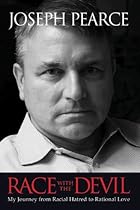
Race With the Devil

Austin Ruse writes about one of my favorite authors Joseph Pearce and his new autobiography:

Race With the Devil: My Journey from Racial Hatred to Rational Love


Race With the Devil: My Journey from Racial Hatred to Rational Love


In Race with the Devil: My Journey from Racial Hatred to Rational Love, Pearce himself takes the reader through his journey from racist revolutionary to Christian, including:


  • The youthful influences that lead him to embrace the National Front and their racist platform
  • His dark, angry, exhilarating but ultimately empty days as a revolutionary on the front lines
  • His imprisonment and subsequent dark night of the soul
  • The role that Catholic luminaries such as G. K. Chesterton, Hilaire Belloc, and C. S. Lewis played in his conversion from racist radical to joyful Christian
  • And his eventual reception in the Catholic Church
  • Friday, May 24, 2013

    How the West Really Lost God

    At Crisis Magazine, Austin Ruse of C-Fam looks at a new book:  How the West Really Lost God by Mary Eberstadt here and then again here.  Basically the book argues that the decline in religion was caused by the decline of the family.

    The description from the publisher makes this book sound like something I would enjoy reading:

    "In this magisterial work, cultural critic Mary Eberstadt delivers a powerful new theory about the decline of religion in the Western world. The conventional wisdom is that the West first experienced religious decline, followed by the decline of the family. Eberstadt turns this standard account on its head. Marshalling an impressive array of research, from fascinating historical data on family decline in pre-Revolutionary France to contemporary popular culture both in the United States and Europe, Eberstadt shows that the reverse has also been true: the undermining of the family has further undermined Christianity itself.


    Drawing on sociology, history, demography, theology, literature, and many other sources, Eberstadt shows that family decline and religious decline have gone hand in hand in the Western world in a way that has not been understood before—that they are, as she puts it in a striking new image summarizing the book’s thesis, “the double helix of society, each dependent on the strength of the other for successful reproduction.”


    Tuesday, May 21, 2013

    America and Catholicism

    Here is a mostly negative review of Christopher Ferrara’s "Liberty: The God That Failed".

    And here is a review by Jeff Miller (aka The Curt Jester) of Rusell Shaw's new book:  'American Church: The Remarkable Rise, Meteoric Fall, and Uncertain Future of Catholicism in America'


    So, what are we Catholics to think?  Is America compatible with Catholicism or not?  Has America been good for the Church at large, and has it been good for us Catholics who live here?  How are we to live as Catholic Americans?  I can't wait to dig more into these books.

    Tuesday, May 14, 2013

    The Rise, Fall and Future of Catholicism in the U.S.

    Russell Shaw has written a new book:  American Church  The Remarkable Rise, Meteoric Fall, and Uncertain Future of Catholicism in America


    The history of the Catholic Church in America is fascinating and one I want to learn more about.  Shaw talks a bit about this history and the importance for American Catholics today here in Catholic World Report. 

    Snip:

    "CWR: What is the "Americanization of American Catholicism"? What have been its fruits over the past few decades?


    Shaw: The expression refers to the process of cultural assimilation by which American Catholics entered the mainstream of American secular culture, became part of it, and bought into many of its values and attitudes. On the plus side, the result has been acceptance, upward socio-economic mobility, and much professional and material success.

    But it has come at a high price. Buying into American secular values has time and again meant buying into a toxic value system in radical conflict with Catholic and Christian convictions on many fronts. And that has meant an ongoing loss of religious identity and commitment to the Church on the part of millions of nominal Catholics—to say nothing of the 22 million ex-Catholics in the United States."

    Friday, May 03, 2013

    New Book by Alice Von Hildebrand

    The great Alice Von Hildebrand is now 90 years young.  She has written a small book - click on the name to see more details:

    Dietrich von Hildebrand and Edith Stein: Husserl's Students

    A brief exploration of the parallel lives of Dietrich von Hildebrand and Edith Stein based on their memoirs. 


    Tuesday, September 27, 2011

    Fr. Benedict Groeschel in Amityville

    He will be at the StarFish CoffeeHouse & Kitchen


    Join us for a meet & greet
    Sat., October 1st @ 1pm
    with Father Benedict Groeschel
    author of

    Wednesday, November 18, 2009

    Jesus of Israel: Finding Christ in the Old Testament

    An evening with Fr. Richard Veras


    Communion and Liberation of Long Island in conjunction with Crossroads Cultural Center presents an evening with Fr. Richard Veras, author of “Jesus of Israel: Finding Christ in the Old Testament.”

    The Shrine of Our Lady of the Island, Eastport, NY
    7 PM on November 21st, 2009


    There is no charge for this event. A free will donation is encouraged.

    Thursday, August 27, 2009

    Daughters of St. Paul Manhattan Bookstore has moved!

    My wife and I drove into NYC today and went to lunch at Simply Pasta. We parked in a garage on 38th right off of 6th Avenue, and when returning to the car I noticed a sign for the Pauline bookstore right next door. The bookstore moved about a month ago, according to the sister behind the counter. The Daughters of St. Paul are so friendly and their bookstore is so good, it was a nice surprise to be able to go there. I bought yet another Joseph Pearce book - small is still beautiful [economics as if families mattered ].


    New Location:

    PAULINE BOOKS AND MEDIA — MANHATTAN, NY
    64 W. 38th St.
    New York, NY 10018

    Thursday, January 01, 2009

    Another Revert speaks:

    "But my story, because it is a return, requires a departure. And that departure, to be candid, does not speak well of the early post-Vatican II American Church. That Church was littered with dioceses, parishes, and schools that did not adequately catechize their young people with a clear and defensible presentation of the Catholic faith. Things, of course, have changed, and swaths of the American Church seem to be ridding themselves of the vestiges of that unfortunate era. The inspiring pontificates of John Paul II (1978–2005) and Benedict XVI (2005– ) have resulted in a new evangelism within the Catholic Church, especially in the United States. Those entering the priesthood seem more serious and theologically orthodox than the priests I remember from the late 1960s and 1970s."

    This is an excerpt from the introduction to Return to Rome Confessions of An Evangelical Catholic by Francis Beckworth. Beckworth was the President of the Evangelical Theological Society and his reversion made some news.

    Tuesday, October 21, 2008

    Necessary Heartbreak
    Product Description
    Do you believe that time heals all wounds? Michael Stewart doesn't. Twelve years later, he's still struggling with the demands of being a single father. His life revolves around his daughter Elizabeth, a precocious girl who's growing up much too fast. Michael is all too aware of time lost, and time still slipping away. But fate, or perhaps something more divine, has other plans for Michael. When he and Lizzie stumble upon a root-cellar door in the floor of an old church, they discover that it's actually a tunnel leading back in time to first century Jerusalem during the tumultuous last week of Christ's life. With the help of Leah, a newfound friend, they try desperately to escape, avoiding menacing soldiers at every turn, including one determined to make Elizabeth his own. Trapped in the past -- both literally and figuratively -- Michael comes face to face with some of his most limiting beliefs, and realizes he must open himself up to the possibility of a deeper faith in God, people, himself, and love before he can find his way home. Michael Sullivan is the author of several books for young readers. He lives on Long Island with his wife and two daughters.

    I was sent a copy of this book by the author, who happens to be a fellow Long Island Catholic. I advised the author, M.J. Sullivan that I do not read fiction, something my wife, a former adjunct English Lit professor tells me I should do. I am glad he sent the book to me as I enjoyed it. This was a quick and interesting read about a Long Island father and daughter that find themselves in Israel at the time of Jesus. The story moves quickly and I found it was not easy to put the book down. The author is a sports writer who has written books for young readers about Chris Mullin (St. John's University basketball star) and Darryl Strawberry ('86 Met!) and others.

    Thursday, October 16, 2008

    I have completed Russell Shaw's book Nothing to Hide and have a few thoughts. (I am now engrossed in Havana Noctune about Cuba before the revolution).

    Shaw's book puts forth the idea that the communication in the Church should be open and free flowing and cites examples of abuse of secrecy. His overall idea is very good and is a great example of a faithful Catholic who sees things in the Church that need reform and lays out the case for reform. This should be the path those who advocate changes in the Church should follow.

    A good point Shaw made in the book is - the ignorance of Church members is not a reason to keep information from them but a challenge to explain and teach that info. In other words the fact that many of us do not understand financial statements does not mean they shouldn't be published but that they should be explained and made as clear as possible. The 'they won't understand' mentality is a self-fulfilling prophecy.

    Shaw also believes the Diocesan newspapers should be opened up to being more than just 'house organs'. I would like to see these papers become more like the National Catholic Register in terms of quality and coverage. But I also see a need for these newspapers to be 'house organs'. It is interesting to note Shaw's desire to see these papers become 'vehicles for public expression' considering his negative views of blogs, which are almost the online version of the letters to the editor section. Overall, this book is an excellent look at an aspect of the Church that could be improved greatly.