Tolkien: Maker of Middle-earth
In a hole in the ground there lived a hobbit.” With these words the Oxford professor J.R.R. Tolkien ignited a fervid spark in generations of readers. From the children’s classic The Hobbit to the epic The Lord of the Rings, Tolkien’s adventurous tales of hobbits and elves, dwarves and wizards have introduced millions to the rich history of Middle-earth. Going beyond literature, Tolkien’s Middle-earth is a world complete with its own languages and histories. Tolkien: Maker of Middle-earth celebrates the man and his creation. The exhibition will be the most extensive public display of original Tolkien material for several generations. Drawn from the collections of the Tolkien Archive at the Bodleian Library (Oxford), Marquette University Libraries (Milwaukee), the Morgan, and private lenders, the exhibition will include family photographs and memorabilia, Tolkien’s original illustrations, maps, draft manuscripts, and designs related to The Hobbit, The Lord of the Rings, and The Silmarillion.
This exhibit is at The Morgan Library and Museum in NYC until May 12th.
Showing posts with label Culture. Show all posts
Showing posts with label Culture. Show all posts
Friday, April 19, 2019
More Podcasts of interest to Catholics
I was listening to the Tom Woods Podcast episode on the Notre Dame Cathedral with guest Denis McNamara, professor at the Liturgical Institute at Mundelein Seminary and author of How to Read Churches . He discussed Catholic architecture and also happened to mention another podcast called The Liturgy Guys. Their most recent episode was about interesting rubrics in the Triduum so of course I had to listen to it. I will have to check out more of their podcasts.
I was listening to the Tom Woods Podcast episode on the Notre Dame Cathedral with guest Denis McNamara, professor at the Liturgical Institute at Mundelein Seminary and author of How to Read Churches . He discussed Catholic architecture and also happened to mention another podcast called The Liturgy Guys. Their most recent episode was about interesting rubrics in the Triduum so of course I had to listen to it. I will have to check out more of their podcasts.
Tuesday, April 16, 2019
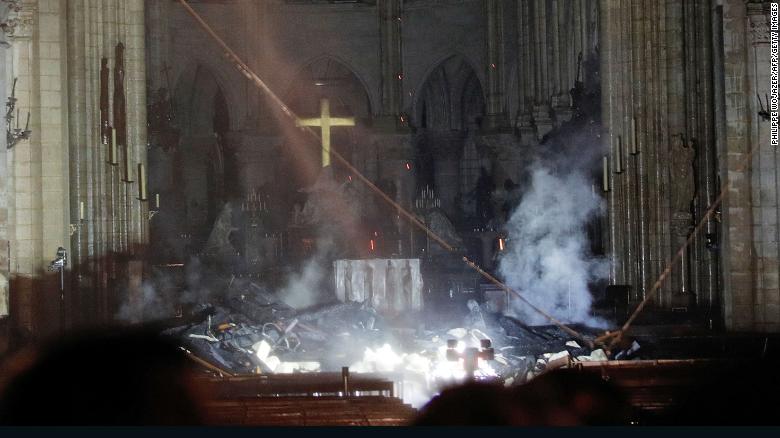
Notre Dame Cathedral
Various people have suggested that the rebuilding effort of the great Cathedral should be combined with a rebuilding of the Catholic faith in France and Europe. Hopefully, this huge tragedy will be the impetus for real renewal. Others have pointed out how universal is the appreciation for this great beauty of a Church- even among those who are indifferent or hostile to religion, Christianity, or Catholicism.
Steven Schloeder commented on his facebook page a great thought as a Catholic architect, ending with this very true bit:
"Consider the Los Angeles Cathedral. It already looks like a wreck. No one would care if it got destroyed. No one loves it. No one thinks it a sign of God's effusive beauty and glory and goodness and order.
Yet Notre Dame de Paris made us weep for its loss. What a contrast."
This is good news:
Donation Pledges Roll In For Notre Dame's Reconstruction
Rod Dreher:
Notre Dame Fire: A Sign For Our Time
Monday, April 15, 2019
The 10 Worst Catholic Church Songs of All Time
The above link takes you to an enjoyable video of The Catholic Talk Show. I am finding that as blogging has become almost dead, the podcasts and vlogs are providing the same thing I used to find with Catholic blogs: Great conversations, funny and orthodox but irreverent discussions on Catholic stuff. This topic of awful Catholic music has been discussed for years yet we still hear the same music at most parishes. Some of the songs discussed in this episode might make fine folk music on its own but the music is not made for congregation singing and is overwhelmingly sappy and thus, not right for Mass.
The above link takes you to an enjoyable video of The Catholic Talk Show. I am finding that as blogging has become almost dead, the podcasts and vlogs are providing the same thing I used to find with Catholic blogs: Great conversations, funny and orthodox but irreverent discussions on Catholic stuff. This topic of awful Catholic music has been discussed for years yet we still hear the same music at most parishes. Some of the songs discussed in this episode might make fine folk music on its own but the music is not made for congregation singing and is overwhelmingly sappy and thus, not right for Mass.
Thursday, April 04, 2019
This looks like an interesting TV show on EWTN. The broadcast times are strange, I have only watched one episode but it is well done and should be on in Prime Time.
REAL LIFE CATHOLIC |
| Chris Stefanick dives into the everyday life of
everyday Catholics, who are working, serving, building, and exploring the world with their faith at their side. |
All Our Children
April 6 - May 12, 2019
Stephen Unwin’s riveting new play is set against a forgotten chapter of the Holocaust, the murder of disabled children and young people, remembering those who died and those who fought against this injustice. Tony Award® winner John Glover (Saint Joan, The Drowsy Chaperone, Love! Valour! Compassion! on Broadway; “Smallville”) is featured in a company including Jennifer Dundas (The Little Foxes, Arcadia on Broadway), Karl Kenzler (Fiddler on the Roof, You Can’t Take It With You on Broadway; “Law & Order,” “House of Cards”), Tasha Lawrence (Good People and Wilder Wilder Wilder on Broadway; “The Looming Tower,” “Royal Pains”) and Sam Lilja (The Iceman Cometh on Broadway). Directed by Ethan McSweeny (Gore Vidal’s The Best Man, A Time to Kill on Broadway).
The persecution, sterilization and murder of hundreds of thousands of disabled people is one of the most overlooked chapters in the whole ghastly history of Nazi Germany. Between 1939 and 1945, it is estimated that well over 200,000 people with a wide range of disabilities were dismissed as Lebensunwertes Leben (‘lives unworthy of life’) and systematically killed in six converted psychiatric hospitals across Austria and Germany. Public opposition to the program was limited. The most striking intervention came from the Bishop of Münster, Clemens von Galen, who will be played by John Glover.
All Our Children is a timely work of historical fiction, but rooted firmly in the true evils of the past.
Not appropriate for children under 13."
The above play looks interesting - you can read more about Bishop von Galen here:
The Lion of Munster
Friday, March 22, 2019
Antoni Gaudí, Patron Saint of Architects?—Gabriela Gonzalez-Cremona
The above link will take you to the Catholic Culture Podcast for a nice discussion of the great Catholic architect Antoni Gaudi. His stunning Basilica La Sagrada Familia was consecrated by Pope Benedict XVI in 2010. I learned today by listening to this Podcast that the building was actually privately funded 'expiatory temple' and is owned by a Foundation -
The Junta Constructora del Temple Expiatori de la Sagrada Família is a private, non-profit, autonomous pious foundation. Its purpose is to build, preserve and restore the Expiatory Temple of the Sagrada Família, founded by Josep Maria Bocabella and designed by Antoni Gaudí, on the plot of land delimited by Mallorca, Marina, Provença and Sardenya streets.
"The Sagrada Família, as an expiatory temple, has always been funded through the donations and contributions of thousands of anonymous individuals over the years."
I learned only when putting up this post that the Foundation recently paid $41 million dollars for lacking a work permit and back taxes (LOL). The government always gets around to getting their hand in everything.
Wednesday, March 20, 2019
Great Website: Institute of Catholic Culture
I have had this bookmarked for awhile but only realized recently that it is free to sign up and get the whole library of talks. I look forward to checking out more of the site which appears to be solid, orthodox education for adults. One of the founders is a revert: Greek Melkite Fr. Hezekias Carnazzo who was interviewed on The Journey Home.
I have had this bookmarked for awhile but only realized recently that it is free to sign up and get the whole library of talks. I look forward to checking out more of the site which appears to be solid, orthodox education for adults. One of the founders is a revert: Greek Melkite Fr. Hezekias Carnazzo who was interviewed on The Journey Home.
Friday, March 08, 2019
Sheen Center for Thought and Culture
There seem to be a number of worthy events in NYC at the Sheen Center. I don't know where I have been that I am only recently hearing about it, but it sounds great.
Named after the late Archbishop Fulton J. Sheen, best known for his popular radio and TV ministry in the 1950s and 60s, The Sheen Center for Thought & Culture is a project of the Archdiocese of New York, presenting more than 75 events in theatre, film, music, and thought per season. The state-of-the-art complex has a 274-seat proscenium theater equipped with five-camera high-definition livestream capability and a multi-track recording studio with thirty-two onstage inputs; an 80-seat black box theater; four rehearsal studios; and an art gallery. This facility is the newest arts center in Manhattan in 35 years and a significant addition to the growing artistic community in NoHo/East Village.
Mission Statement
The Archbishop Fulton J. Sheen Center for Thought & Culture is a forum to highlight the true, the good, and the beautiful as they have been expressed throughout the ages. Cognizant of our creation in the image and likeness of God, the Sheen Center aspires to present the heights and depths of human expression in thought and culture, featuring humankind as fully alive. At the Sheen Center, we proclaim that life is worth living, especially when we seek to deepen, explore and challenge ourselves, Catholic and non-Catholic alike, intellectually, artistically, and spiritually.
Wednesday, March 06, 2019
Ignatius Press at Forty
Congrats to Ignatius Press which played a huge role in my reversion. I still have hundreds of IP books some of which I have yet to finish reading (or start reading). I keep thinking I will donate them to a Catholic parish library someday but hopefully one that is not far away in case I want to keep reading some of them. Fr. Fessio has surely accomplished a huge thing for the Church. If you are not familiar with Ignatius Press check it out.
"Ignatius Press books are invariably well-presented, of a similar size and texture. They are physically good to hold. Their print is easy to read. The editing is always careful. The reader can be sure that there is an argument to be made, a point to be considered that gets to the heart of some basic issue. I recall Father Fessio saying to me years ago that we never know who will read a book. A book is thrown out there into the world, searching, as it were, for a reader. We never know who, if anyone, will ever read it or when or where, or in what language. Book publishing is both an act of faith and a throwing of the dice."
The Spiritual Witness of Flannery O'Connor
This article by Amy Welborn at Catholic World Report is a couple of years old but is a good starting place if you want to get to learn about O'Connor. I was introduced to her in my Catholic High School and think she is one of the greatest American writers. The article mentions a documentary about Flannery called Uncommon Grace.
Here is a snip from the article, click on the title of the post to read the whole thing:
"How is it that stories about shyster Bible salesmen, unbelieving preachers, murderers, farmers, racists, and arrogant pseudo-intellectuals—most of whom find themselves at the wrong end of a gun or bull or weaponized textbook at one time or another—can be “spiritual”? Where’s my gauzy cover art and happy ending?
Well, if that’s our notion of “spiritual reading”—either fictional or non-fictional—no, we’re not going to “get” Flannery O’Connor. O’Connor looked at the world and saw a hard place—not because God wanted it so, but because we made it so. Moreover, she saw a loud place, deaf and blind and deeply resistant to grace—grace that she knew and trusted was still being offered.
How do you get the shysters, the unbelievers, the intolerant, and the prideful—namely, all of us—to see? You must, as she said of her own writing, shout. You must exaggerate."
Monday, May 07, 2018
Weigel and Dreher and Parishes
I just listened to a short interview with the great George Weigel on the Catholic Answers Focus Podcast. He discussed his newest book entitled The Fragility of Order (Ignatius Press). Weigel mentioned disagreeing with Rod Dreher's The Benedict Option and proposed that rather than separating or retreating into intentionally set apart groups Catholics need to shore up the Dioceses, parishes and colleges that have always made up the Church. This is interesting to me because I attended Catholic schools my whole life, but my child is attending public schools and just completed the first year of 'Religious Education' at the local parish. My wife and I discussed the big difference between our having a religion class on a regular basis, in addition to religious activities and sacraments as part of the regular school day, and my child going to an 'extra' class one night a week after a long day of school and homework. He will not get a fraction of the religious education as well as the contact with the Catholic culture (such as it was and is) that we received in Catholic schools. When I started this blog I was not married and had no children so I could attend various intellectual, educational and spiritual programs but now, I would be lucky to attend one lecture somewhere. It is the same for most people. The parishes really are the places where Catholics will meet the faith and pass it on to the next generation (or not).
Weigel also mentioned that rather than counting Mass attendance on a Sunday and comparing it to the same Sunday of the previous year, a better way of evaluating the vitality of a parish is in how many baptisms and weddings there are and how many adults enter the Church at the Easter Vigil. This reminded me of another Podcast I listened to recently (The Untitled Catholic Podcast) where a local priest mentioned St. Patricks in Smithtown where 24 people received Sacraments at the Easter Vigil!!!
I just listened to a short interview with the great George Weigel on the Catholic Answers Focus Podcast. He discussed his newest book entitled The Fragility of Order (Ignatius Press). Weigel mentioned disagreeing with Rod Dreher's The Benedict Option and proposed that rather than separating or retreating into intentionally set apart groups Catholics need to shore up the Dioceses, parishes and colleges that have always made up the Church. This is interesting to me because I attended Catholic schools my whole life, but my child is attending public schools and just completed the first year of 'Religious Education' at the local parish. My wife and I discussed the big difference between our having a religion class on a regular basis, in addition to religious activities and sacraments as part of the regular school day, and my child going to an 'extra' class one night a week after a long day of school and homework. He will not get a fraction of the religious education as well as the contact with the Catholic culture (such as it was and is) that we received in Catholic schools. When I started this blog I was not married and had no children so I could attend various intellectual, educational and spiritual programs but now, I would be lucky to attend one lecture somewhere. It is the same for most people. The parishes really are the places where Catholics will meet the faith and pass it on to the next generation (or not).
Weigel also mentioned that rather than counting Mass attendance on a Sunday and comparing it to the same Sunday of the previous year, a better way of evaluating the vitality of a parish is in how many baptisms and weddings there are and how many adults enter the Church at the Easter Vigil. This reminded me of another Podcast I listened to recently (The Untitled Catholic Podcast) where a local priest mentioned St. Patricks in Smithtown where 24 people received Sacraments at the Easter Vigil!!!
Wednesday, April 27, 2016
I have not posted one of these notices in a long time but I am pleased that Faith on Tap is still going on at the Wantagh Inn! I attended in the 'early years' and was one of the people who helped to organize it. I have aged out but I bought a house nearby so I hope to drop in one day and see how it has aged.

Thursday, April 21, 2016
St. John Cantius chosen America's Most Beautiful Church
Finally an election I can care about - all located at Art and Liturgy!
The contest was modeled after the college basketball 'March Madness' and not surprisingly, the Diocese of Rockville Centre did not have single entry in the Northeast bracket.
"The Rev. Joshua Caswell, a priest with the Canons Regular, the religious order housed at St. John Cantius, said he believes the contest provided a pleasant distraction for Catholic faithful.
"Beauty matters," he said. "Our culture is starved for beauty.
"He admits he didn't think about the importance of the contest at the time. But as St. John Cantius advanced to the "Theological 32," the "Stunning 16," and the "Ecclesiastical Eight," he was in it to win it, as were other competitors, he learned."
Here is the website for St. John Cantius.
And here is the website for the runner up - The Cathedral of the Madeleine in Salt Lake City.
Finally an election I can care about - all located at Art and Liturgy!
The contest was modeled after the college basketball 'March Madness' and not surprisingly, the Diocese of Rockville Centre did not have single entry in the Northeast bracket.
"The Rev. Joshua Caswell, a priest with the Canons Regular, the religious order housed at St. John Cantius, said he believes the contest provided a pleasant distraction for Catholic faithful.
"Beauty matters," he said. "Our culture is starved for beauty.
"He admits he didn't think about the importance of the contest at the time. But as St. John Cantius advanced to the "Theological 32," the "Stunning 16," and the "Ecclesiastical Eight," he was in it to win it, as were other competitors, he learned."
Here is the website for St. John Cantius.
And here is the website for the runner up - The Cathedral of the Madeleine in Salt Lake City.
Wednesday, April 20, 2016
Is Dorothy Day Suitable for Canonization?
The above link is to an article written in Crisis Magazine by Fr. Brandon O'Brien, a priest of the Diocese of Rockville Centre who was ordained in 2013. He seems to take the 'nope' position to the headline question:
"Dorothy Day’s cause is different. In light of Day’s positions concerning some of the most horrific and deadly events of the twentieth century, she is anything but an “attractive possibility” for sainthood. In her lifetime, Day publically advocated various Communist regimes linked to the Soviet Union. Western intellectuals who supported these regimes knew that they consisted of anti-Catholic, atheist governments whose public policy was the firing squad. Often, as was the case with Spain, these regimes were even condemned by the Church’s magisterium. If Lumen Gentium is a blueprint for the modern Christian’s path to holiness and sanctity, it would appear that Day’s support for a Spanish government condemned by Pius XI is not in keeping with the exhortation that Christians “follow in [Christ’s] footsteps and conform themselves to His image seeking the will of the Father in all things.” Her tacit approval of the violence of Castro’s atheist regime in Cuba is also a stumbling block to the call for Christians to “manifest to all men the love with which God loved the world.”
This article comes right on the heels of this announcement from the Archdiocese of New York:
"The Cause for Dorothy Day’s possible eventual beatification and canonization moved into a new phase today as Cardinal Timothy Dolan, the Archbishop of New York, opened the canonical Inquiry on the life of the Catholic Worker movement founder, gathering evidence to determine if Dorothy Day lived a life of “heroic virtue” in the eyes of the Church. "
The above link is to an article written in Crisis Magazine by Fr. Brandon O'Brien, a priest of the Diocese of Rockville Centre who was ordained in 2013. He seems to take the 'nope' position to the headline question:
"Dorothy Day’s cause is different. In light of Day’s positions concerning some of the most horrific and deadly events of the twentieth century, she is anything but an “attractive possibility” for sainthood. In her lifetime, Day publically advocated various Communist regimes linked to the Soviet Union. Western intellectuals who supported these regimes knew that they consisted of anti-Catholic, atheist governments whose public policy was the firing squad. Often, as was the case with Spain, these regimes were even condemned by the Church’s magisterium. If Lumen Gentium is a blueprint for the modern Christian’s path to holiness and sanctity, it would appear that Day’s support for a Spanish government condemned by Pius XI is not in keeping with the exhortation that Christians “follow in [Christ’s] footsteps and conform themselves to His image seeking the will of the Father in all things.” Her tacit approval of the violence of Castro’s atheist regime in Cuba is also a stumbling block to the call for Christians to “manifest to all men the love with which God loved the world.”
This article comes right on the heels of this announcement from the Archdiocese of New York:
"The Cause for Dorothy Day’s possible eventual beatification and canonization moved into a new phase today as Cardinal Timothy Dolan, the Archbishop of New York, opened the canonical Inquiry on the life of the Catholic Worker movement founder, gathering evidence to determine if Dorothy Day lived a life of “heroic virtue” in the eyes of the Church. "
Sunday, December 08, 2013
Beneath Malta’s Beauty, a Tangled History
From the New York Times Travel section:
"Nicholas de Piro doesn’t look like a warrior monk. As the bespectacled grandfather padded around his 16th-century palazzo, pointing out curiosities like a gilded sedan chair and silver medical tools, he appeared more likely to offer me a cup of tea than slay anyone in the name of Christ. And yet that is the sort of thing Mr. de Piro’s order, the Knights of Malta (officially the Sovereign Hospitaller Order of the Knights of St. John of Jerusalem, of Rhodes and of Malta), were known for in their heyday. Drawn from the most noble families of Europe, they left their homelands, took vows of chastity and obedience and dedicated themselves to fighting infidels. The order no longer wages war, focusing instead on caring for the sick and poor. Until I arrived at Mr. de Piro’s doorstep on the Mediterranean island-nation of Malta, though, I’d had no idea that the Knights of Malta still existed.
The history of Malta — actually an archipelago that includes three inhabited islands, just 50 miles south of Sicily — is peppered with violence and disorder. Today, though, it is hard to find a corner of the country that doesn’t feel peaceful and safe. Its crystal-clear, intensely blue waters make for some of the best snorkeling and scuba diving in Europe, while its beaches, rocky coves, arid hills and warm weather have long attracted northern neighbors in search of cheap sunshine. And yet not even 2 percent of visitors come from the United States. If you have seen it recently, it was probably in its role as a Hollywood stand-in for places like Athens (“Munich”) and Jerusalem (“World War Z”)"
"Nicholas de Piro doesn’t look like a warrior monk. As the bespectacled grandfather padded around his 16th-century palazzo, pointing out curiosities like a gilded sedan chair and silver medical tools, he appeared more likely to offer me a cup of tea than slay anyone in the name of Christ. And yet that is the sort of thing Mr. de Piro’s order, the Knights of Malta (officially the Sovereign Hospitaller Order of the Knights of St. John of Jerusalem, of Rhodes and of Malta), were known for in their heyday. Drawn from the most noble families of Europe, they left their homelands, took vows of chastity and obedience and dedicated themselves to fighting infidels. The order no longer wages war, focusing instead on caring for the sick and poor. Until I arrived at Mr. de Piro’s doorstep on the Mediterranean island-nation of Malta, though, I’d had no idea that the Knights of Malta still existed.
The history of Malta — actually an archipelago that includes three inhabited islands, just 50 miles south of Sicily — is peppered with violence and disorder. Today, though, it is hard to find a corner of the country that doesn’t feel peaceful and safe. Its crystal-clear, intensely blue waters make for some of the best snorkeling and scuba diving in Europe, while its beaches, rocky coves, arid hills and warm weather have long attracted northern neighbors in search of cheap sunshine. And yet not even 2 percent of visitors come from the United States. If you have seen it recently, it was probably in its role as a Hollywood stand-in for places like Athens (“Munich”) and Jerusalem (“World War Z”)"
Thursday, December 05, 2013
10 Things You Didn’t Know About ‘The Sound of Music’ and the Real-Life Maria von Trapp
"Tonight, NBC will broadcast The Sound of Music Live!, which is
exactly what it sounds like: a live production of the classic Rogers and
Hammerstein musical. Starring Carrie Underwood as Maria von Trapp, the
nun who forsakes her religious calling to marry the man she loves so
they can tour the world with their brood of singing children, the
production is the first live television event of its kind in decades. The Sound of Music
is a beloved family classic, but there’s quite a lot you may not know
about the musical, the wildly popular film based upon it, and the
real-life Maria von Trapp."
Read the rest - this live event is being done from the former Grumman plant in Bethpage, Long Island. This is where thousands of Long Islanders once worked, including those that built the lunar module that landed on the moon.
Read the rest - this live event is being done from the former Grumman plant in Bethpage, Long Island. This is where thousands of Long Islanders once worked, including those that built the lunar module that landed on the moon.
Friday, November 29, 2013
Christmas Schkatalata in Italian Brooklyn
From Regina Magazine, which is well done and free, comes this beautiful article by Camille Loccisano.
"There’s no getting around it. As an Italian-American, my holidays have always included great food, especially at Christmas.
I
grew up in Bay Ridge, Brooklyn — a middle-class neighborhood which
nestles like a small jewel under the Verrazano Bridge. In the 1960’s,
70’s and 80’s, it was home to many Italian and Irish immigrant families,
and offered a harmonious life for one and all in our Catholic
community.
At
St. Patrick’s Grammar School, I can still recall the month-long Advent
season, with the frigid December days leading up to the breathless
excitement of Christmas Eve. In every comforting classroom at St.
Patrick’s, the polished oak floors were warm beneath our feet as Sister
Muriel Agnes taught us about the Advent wreath. My family attended 9
a.m. Mass every Sunday morning, and I sang in the choir – ancient
Catholic carols about the birth of our Savior.
At
home, there was a whirl of tremendous energy as we prepared for
Christmas, centering on the person of Grandma Sue. When I was growing
up, she lived in the ground-floor apartment of my parents’ home. Though
she was the perfect picture of an old-fashioned Italian grandmother,
Grandma Sue was not actually my grandmother. Nonetheless, she was like a
grandma to me in every sense of the word."
To find out what Schkatalata is, click here to read the whole article.
Friday, October 25, 2013
The Rabbi Who Spoke to Rome
From the NY Post, a column about Pope Benedict's Creative Minority:
"Did you hear the one about the rabbi, the pope and the humanist?
You did if you were at the Union League Club Monday evening. The rabbi is Jonathan Sacks, the pope is Francis and the humanist is Erasmus. These names mingled Monday night in an address aimed mainly at Western Christians who find themselves outcasts in a civilization once dominated by Christian principles and Christian practices.
For these people, the first part of the rabbi’s message is bleak: The battle for power is over, and you lost.
The second half is more arresting: Don’t worry about it.
Precisely by losing power, the rabbi says, Christians might recover the prophetic voice our society desperately needs. By that he means a community of Christians who, by staying true to their faith without aiming to convert the larger society to their beliefs, become a leaven for society."
"Did you hear the one about the rabbi, the pope and the humanist?
You did if you were at the Union League Club Monday evening. The rabbi is Jonathan Sacks, the pope is Francis and the humanist is Erasmus. These names mingled Monday night in an address aimed mainly at Western Christians who find themselves outcasts in a civilization once dominated by Christian principles and Christian practices.
For these people, the first part of the rabbi’s message is bleak: The battle for power is over, and you lost.
The second half is more arresting: Don’t worry about it.
Precisely by losing power, the rabbi says, Christians might recover the prophetic voice our society desperately needs. By that he means a community of Christians who, by staying true to their faith without aiming to convert the larger society to their beliefs, become a leaven for society."
Ave Maria, Florida - a Catholic Town
Calah Alexander, blogger at the great Barefoot and Pregnant, is interviewed at Catholic Stand about what it is like to live in Ave Maria, the town founded by Thomas Monaghan. It is fascinating because in listening to what she says about kids being able to play in the streets, borrowing from neighbors, and strangers introducing themselves to each other, I hear what Long Island used to be like to some extent years ago. What was once normal for many parts of the US, is now considered strange enough that it has to be 'created'. Ave Maria sounds like a nice experiment and I hope it works out well.
"I think the overwhelming presence of children is the primary thing that makes Ave Maria remarkably different. Kids are welcome everywhere. No one expects you to leave kids at home, or if they do it’s clearly stated and childcare is usually provided. The town events are always family-oriented, there are high chairs in every restaurant, and no one freaks out at a breastfeeding mom or parent dragging a screaming toddler through the grocery store. That’s part of life. We’ve either been there, hope to be there, or wish we weren’t there. Sympathy and smiles all around."
"I think the overwhelming presence of children is the primary thing that makes Ave Maria remarkably different. Kids are welcome everywhere. No one expects you to leave kids at home, or if they do it’s clearly stated and childcare is usually provided. The town events are always family-oriented, there are high chairs in every restaurant, and no one freaks out at a breastfeeding mom or parent dragging a screaming toddler through the grocery store. That’s part of life. We’ve either been there, hope to be there, or wish we weren’t there. Sympathy and smiles all around."
Subscribe to:
Posts (Atom)